Viktoriya Shekhtmeyster is a Ukrainian Immigrant who has lived in the Bay area for over 20 years. She moved out to San Francisco as a child with her extended family so that she could grow up in a more stable, materialistic environment. Homesickness was never an issue for Viktoriya because she was lucky enough to have a family that held on dearly to their traditional roots. Now a mother of two beautiful baby boys, she spends her days in foggy San Bruno. This interview reveals insights into her personal journey as an immigrant to the United states, and the various obstacles she faced when adapting to her new American lifestyle.
San Bruno, California
Below is a videoed interview between myself and Viktoriya. She discusses her opinions on being a United States immigrated citizen, and her experience growing up.
Ferdinand Valderona is a recent Filipino Immigrant who came here with his son, Jason Bolloso to rebuild life in the United States, and more specifically: Daly City. Ferdinand had been living his entire life up until 2010 when he decided to move to Daly City and build life their with his son and uncle. Without having a place to work back in the Philippines, Ferdinand must adapt to life in the United States and find a place to support his family in Daly City. Throughout the few years that he has been in Daly City, Ferdinand talks about what it is like to be living in America, how he feels about being outside of the Philippines, and how his life in Daly City is working out for him. Ferdinand also talks about his semi-political views regarding democracy and his personal opinion about Ferdinand Marcos and the recent Typhoon in his homeland.
Section 1: How much different is the U.S. culture as compared to Filipino Culture?
Section 2: Did you ever feel homesick? Was there a point in time when you felt homesick?
Section 3: How much has the U.S. impacted your life?
Section 4: Did you have any relatives that were hit by the huge typhoon Yolanda?
Section 5: Is there anybody that you look up to in Filipino History? Since Ferdinand Marcos was a big part of Filipino history, do you agree with his ways or a more democratic position?
Conclusion: As time will go on, Ferdinand will find more and more reasons as to stay in the United States along with his son and uncle. Seeing as how he has retired his work back in the Philippines, has had felt homesick at least once in his life, enjoys both Filipino AND American culture, feels strong about his democratic views, and disagrees with Ferdinand Marcos' reign, I feel that Ferdinand Marcos will feel right at home in his new country.
My interviewee, Jose Enlope whose history is the life of Filipino immigrant worker, who left the Homeland because of poverty and lack of opportunity for successful life. Jose Enlope was born in Negros Island, Philippines in 1957 in a middle class family. Jose finished high school and graduated college in Manila city, then left the Philippines when he was 21 years old. Jose immigrated to Guam where he worked 16 year for Japanese Farm Company. Then in 1994 Jose moved to Saudi Arabia, where he was working 4. Finally in 2001 Jose arrived to the United States and settled in San Francisco.
Jhoy Osorio came to the United States in her early adult years. She received the opportunity to come to America through her father. A fear of discrimination was something she faced as she tried to start a life over here in America. She didn't want to be made fun of because of her accent when she tried to speak English. She eventually settled down and had a family. She described the difference between America and the Philippines as, "You can buy anything you want here. But in the Philippines, you have to buy the food first before you buy anything else." She describes herself as Filipino American because morally, she keeps the Philippine ways with her like when she was in the Philippines. But she admits to being materialistic also. Jhoy believes that the Philippines is full of corrupt politicians and believes there needs to be change. She feels no betrayal to the Philippines and family still over there as she goes back to visit often and sends them goods from here.
Jhoy Osorio's experience here when she first came to the United States.
Jhoy Osorio with her husband, Kelly Osorio, when they were still relatively new to America.
Jhoy Osorio speaks about the transition from the Philippines to the United States.
Jhoy Osorio and her husband now.
What citizenship means to Jhoy Osorio.
Jhoy Osorio, husband, and her three kids a couple of years ago.
Jhoy's perspective on being "americanized" or not.
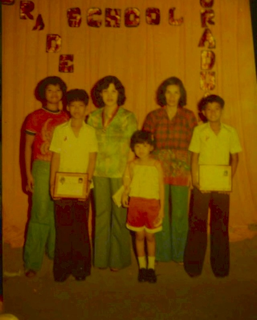
Jhoy(Middle child) at school in the Philippines.
How Jhoy Osorio received the opportunity to come to the United States.
Jhoy(Infant) with her mother and sister in the Philippines.
a
Jhoy on if she would come to the United States like her parents did.
Jhoy on the Philippines Newspaper and the Philippine's government
Kevin Cruz has been my best friend of ten years and counting... The reason why I chose him to be featured in my oral history project is because we grew up together. I wanted to find out something I have never asked -- his experiences growing up as a Filipino immigrant in the Bay Area. I must say, it's fairly similar to mine. The outcome may have been different, but our main goal is to gain massive success. Now, he is the CEO and co-founder of Electric State of Mind, a fast growing event production company that provides peace, love, unity, and excitement to its beloved supporters.
Jon Juen is my sister boyfriend who I've known for about 4-5 years now. I chose to interview him because he met all the criteria that I needed, he's Filipino, lived in the Philippines for a couple of years before moving to the United States, and he reside in Daly City along with his family.
Manila, Philippines
Jon Juen came to the United States when he was about 6 years old. He moved along with his parents and younger sister, who was still a kid at that time. His family moved to live the "American Dream". Jon said that he was living pretty comfortable back in the Philippines. He lived in the "Big House" and that all the little houses that lived in his families property worked for his parents. So leaving everything behind, his parents decided to take the risk so that their children could have a better future. As many other interviwees said, starting a new life anywhere is difficult and that is what the Juen family faced, a difficult few years starting off in the United States, along with a new member of the family. But with a little help from his grandparents, who moved to the United States first, made it a little easier on them. Jon was young when he first moved to the United States so he didn't know what to expect. He did have to adapt to a new culture as well as learn a whole different language. He said that things were much easier and smooth once they got settled.
Even though Jon has lived in the United States for about 20 years now, he still doesn't see it as "home" for him. He still feels like the Philippines is home and that it always will be since that's where he was born and spent his early years. Since moving to the United States he has not gone back to visit but is planning a trip within a couple years to go back to the Philippines and visit his family that do still live there.
My oral history project is about Mrs. Arsenia Nicanor's memories and struggles as a Filipino worker immigrant in America. Mrs. Nicanor came to the U.S. with her two daughters. They came with R1 visa or Religious working visa. They are all Christian Science Nurses. She loves America because she is earning money by the hour instead of per day, as she did in her homeland. According to her, the welfare system here in America is better because anyone who needs it can get free food, free health care and financial aide.